Observation stream 01
Patient voice
How symptoms, function, and daily life feel between visits.
Longitudinal clinical context
MyMedVisit captures patient and caregiver observations by voice, identifies meaningful change over time, and helps connect emerging concerns with the appropriate care workflow.

A shared workflow
Capture patient and caregiver observations naturally by voice.
Organize observations into a longitudinal picture of symptoms, function, and change.
Apply specialty-specific clinical logic to identify information that may require attention.
Support escalation, review, and documented care-team action through the appropriate workflow.
Information is organized to support appropriate human review—not to diagnose, guarantee detection, or replace clinical judgment.
The dyadic model
Patients and caregivers may notice different or complementary changes between visits. Bringing those observations into context can help make the timeline more useful for care-team review.
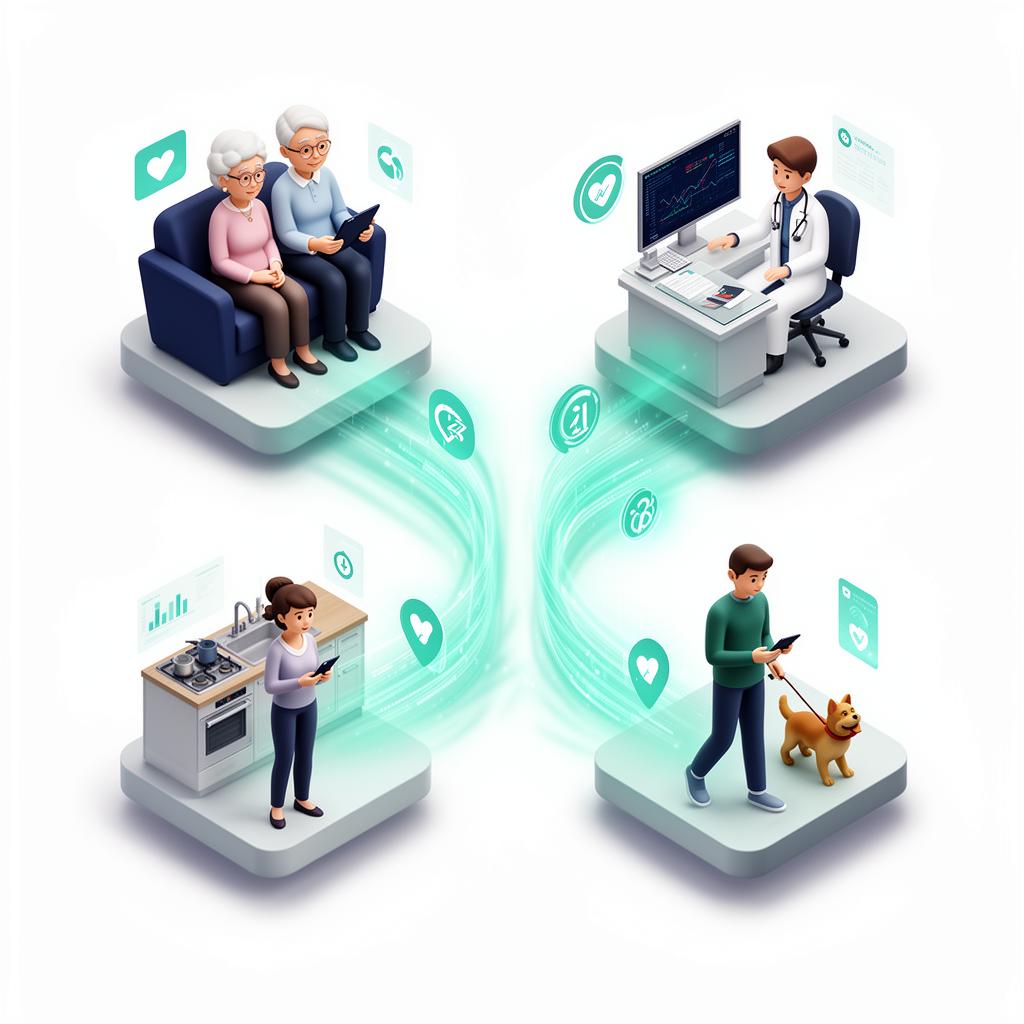
Observation stream 01
How symptoms, function, and daily life feel between visits.
Observation stream 02
Changes another person may notice from a different point of view.
Shared longitudinal picture
Patient and caregiver perspectives
Timeline point 1Symptoms, function, and change
Timeline point 2Context for care-team review
Timeline point 3Sharing remains intentional and permission-based. Family members do not automatically receive clinical information.
Four applications, one shared platform
Each specialty brings its own clinical context to the same platform foundation: observations, change over time, prioritization, and care-team review. These examples are synthetic and do not represent clinical validation, active deployment, or institutional partnership.
Specialty application
Treatment-related symptoms, patient and caregiver observations, longitudinal change, prioritization, and care-team review.
Illustrative sequence
Privacy & user control
Designed for clarity
Clear language, readable type, calm contrast, and a voice-first approach support a straightforward experience.

FAQ
No. MyMedVisit is designed to organize patient and caregiver observations and support appropriate review. It does not replace advice, diagnosis, or decisions from a qualified healthcare professional.
Do not wait for an app to identify or respond to an urgent problem. If symptoms are severe or rapidly worsening, contact emergency services or a qualified healthcare professional. MyMedVisit is intended to support information organization and care-team review; it does not diagnose or guarantee detection of every urgent concern.
Patient and caregiver observations can offer different or complementary perspectives. Any sharing of information with another person should be intentional and permission-based; family members do not automatically receive clinical information.
Sharing should happen only through options you choose and authorize. Review the available controls before sharing information, and share only with people you intend to include.
Ask the people involved for permission before recording. Also follow the healthcare organization’s policies and the laws that apply where you are. If permission is not clear, do not record.
“Would it be okay for me to record this conversation for my personal reference?”
Tip: Respect a request not to record, and do not assume that permission to record also permits sharing the recording or its contents with someone else.
Make the time between visits count
Explore the platform or get in touch to learn more about the MyMedVisit approach.